June 12, 2026
Don't forget your Bonanza Pack
Parallax marked the launch of Sensible Software, a company founded by two young British lads, Chris Yates (programmer) and Jon Hare (artist), back in 1986.
Sensible Software, which would later go on to create classics such as Wizball and MicroProse Soccer (the predecessor to the legendary Sensible Soccer), demonstrated its enormous potential with Parallax, a remarkable technical achievement that, combined with Martin Galway’s musical mastery, helped it stand out among the titles of its era.
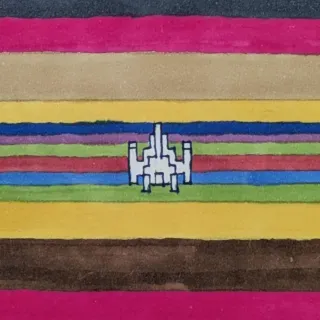
Parallax is a simple side-scrolling shoot’em up that also introduces exploration elements, allowing us to leave our ship and explore different locations in order to progress through the adventure.
Its story is simple, yet wonderfully absurd. The game could easily have been called Paradox instead of Parallax because of its inconsistencies. We arrive on an unknown planet: you, a renowned astronaut, accompanied by four of Earth’s finest astronauts. What initially appears to be a peaceful place soon turns hostile, and our mission is to rescue those four astronauts and get out of there as quickly as possible.
So what’s the problem? There are five levels, and in each one we rescue an astronaut. In other words, five of us arrive, but by the end of the game six of us leave. It reminds me of the Spanish title of Alien, Alien: The Eighth Passenger, except in this case we’d be dealing with a mysterious sixth passenger instead!
But that’s not even the weirdest part. Throughout the game, we’ll be hunting down evil scientists, kidnapping them, stealing their ID cards so we can rob their bank accounts, and then drugging them to obtain the password needed to access the main computer and unlock the next level.
Parallax is a real challenge and a very unforgiving game by today’s standards. Despite its short length, it’s easy to die, and landing the ship can sometimes be difficult and even a little tedious. Even so, it’s an entertaining experience and one that I think deserves a chance, as it perfectly reflects the innovation of an era when everything was just beginning.
The music. I think chiptune fans will agree that this game’s melodies and sound design are fantastic, transporting us to an atmosphere of deep space and futuristic exploration. Martin Galway, one of the Commodore 64’s most celebrated composers, was working at Ocean at the time, which allowed him to take charge of the game’s soundtrack.
The combination of shoot’em up gameplay with investigation and clue-gathering mechanics is something I find very appealing.
The smooth movement of the ship and the ability to gradually ascend or descend feel technically impressive for the era.
The game’s five levels: Alpha, Beta, Gamma, Delta and Epsilon, offer very little variety beyond a few colour changes and minor alterations to the scenery.
Although it’s interesting that the game includes exploration mechanics, I think in some cases they detract more than they add: